Health First Physician Dr. Gary Hardoon Says Even in Florida Vitamin D Deficiency is Common
By Space Coast Daily // July 17, 2025
For Health First Health Plans members this is an opportunity to take a proactive role in their health

Health First expert shares why your levels matter and how Health First Health Plans members can stay ahead of deficiencies
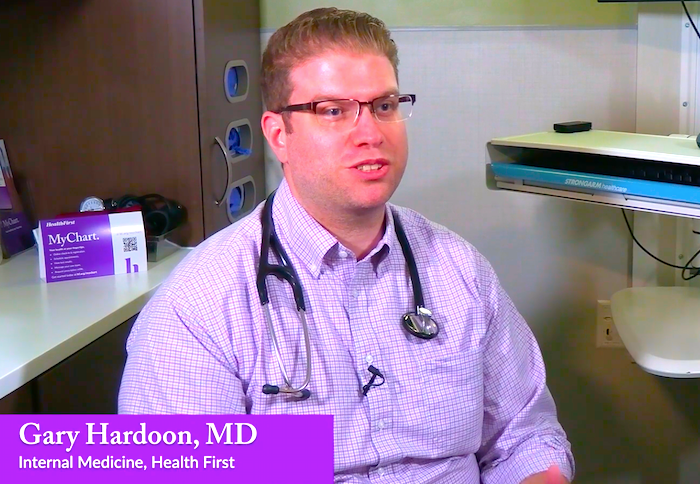
BREVARD COUNTY • ROCKLEDGE, FLORIDA — It’s easy to assume that if you live in sunny Florida, your vitamin D levels are fine — but that assumption could leave your health at risk. Dr. Gary Hardoon, an internal medicine physician at Health First, says vitamin D deficiency is extremely common, even in the Sunshine State.
“I see a tremendous number of patients with vitamin D deficiency,” he said. “It’s mainly not going to be the people who are more active outside. It’s going to be our office workers that go to work before the sun comes up and come home when the sun’s going down. They’re really not getting that sunlight exposure.”
For Health First Health Plans members, this is an opportunity to take a proactive role in their health, by understanding their levels and acting through preventive care and nutritional support.
“Vitamin D is an essential part that plays many different roles in our body,” Hardoon explained. “It contributes to the development and calcification of our bones. It’s a fat-soluble vitamin that helps our body absorb calcium and phosphorus, and it also helps regulate our parathyroid hormone, so it plays a big role in bone health and calcium levels.”
While some studies suggest vitamin D may also play a role in immune and muscle function, Hardoon said the strongest data remains in bone health and calcium regulation.
Vitamin D levels are measured in nanograms per milliliter, and Hardoon explained that anything over 20 is generally considered “sufficient.”
“Insufficiency is usually 12 to 20, and deficiency is under 12,” he said. “But it’s somewhat debatable. There is a range, and different guidelines vary a bit.”
He noted that most people with low vitamin D don’t have obvious symptoms, which is why proactive lab work and preventive visits with a primary care provider — often covered in full under Health First Health Plans — are so important.
“The large majority of the time people have no symptoms whatsoever,” he said. “We either catch it incidentally or when something else is going on, like abnormal calcium levels.”

While vitamin D is naturally produced by the body with sun exposure, Hardoon cautions against relying on that as your main source.
“I always have patients who tell me, ‘I don’t know why my vitamin D is low, I’m in the sun all the time,’” he said. “I can’t stress enough — do not risk it for skin cancer. You can easily take vitamin D supplementation over the counter.”
In the U.S., many foods are fortified with vitamin D — including milk and cereal — but amounts are often too small to make a major difference on their own.
“Milk is fortified in vitamin D — a common misconception is that people think it’s naturally in milk. That’s a United States-specific thing we do,” he said. “One glass of milk is about 100 units of vitamin D. That’s not enough for most people.”
Daily multivitamins are a good option, Hardoon said — as long as patients aren’t accidentally doubling up.
“I always tell people to make sure vitamin D is in the multivitamin. But I also have patients taking multiple vitamins and they don’t realize they’re duplicating — so they think they’re taking 800 units, but they’re getting 4,000.”
The general recommendation for adults 19 years of age to 70 years of age is 600 international units (IU) per day and those 71 years of age and older is 800IU per day, Hardoon said.
These are levels often found in standard multivitamins, which may be covered under a Health First Health Plans OTC allowance depending on the plan.
If you’re taking supplements and your levels are still low, there may be something else going on.
“Vitamin D is a little different because it’s not just about absorption — it also has to be processed by your liver and kidneys,” Hardoon said.
“If your labs still show a deficiency after consistent supplementation, we need to figure out why. Is there a gastrointestinal absorption issue? Liver or kidney problems? We start with bloodwork and bring in specialists if needed.”
Hardoon said this is especially important for older adults — a population that may not absorb or convert vitamin D as effectively and is also at greater risk for fractures or bone loss.
“For those patients, it’s super important to keep an eye on it, make sure that you know how it’s trending so you can adjust either more or less as needed.”
When vitamin D deficiency is found, doctors typically recommend a supplement and then recheck levels in 3 to 4 months.
“If they are very low, we’ll typically do the once-a-week vitamin D supplementation initially,” he said. “If it’s just a little low, we’ll do daily over-the-counter vitamins.”
But more isn’t always better — too much vitamin D can become dangerous.
“High vitamin D with excessive calcium intake can cause your calcium levels to go too high, and it could actually even cause death in some cases,” Hardoon warned. “That’s another reason we recheck and follow up with patients. I’ve had older patients tell me they found a 10,000-unit supplement and are taking it twice a day — that’s concerning.”
Health First Health Plans encourages members to schedule regular wellness visits and ask their providers about key labs, including vitamin D. Many plans offer lab benefits, nutritional counseling, and even over-the-counter allowances that can be used on supplements.
CLICK HERE to learn more about how your plan supports your bone and overall health, or call the Member Services number on your Health First Health Plans card.
 Related Story:
HOT OFF THE PRESS! July 14, 2025 Space Coast Daily News – Brevard County’s Best Newspaper