Brevard Mosquito Control Experts Search for Answers as Space Coast Leads Florida in Dengue Cases
By Space Coast Daily // October 9, 2025
Brevard has recorded 31 locally acquired dengue cases, roughly two-thirds of Florida’s total

BREVARD COUNTY, FLORIDA — After recent heavy rain, Brevard County mosquito control teams are racing to eliminate standing water, while public-health experts try to answer a worrying question: why is Brevard County seeing more locally acquired dengue cases than anywhere else in Florida this year?
Joseph Faella, director of Brevard County Mosquito Control, said crews have been treating water-holding containers and larval habitats across the county. “I’m hoping at this point that the spike is behind us,” Faella said.
“We’re optimistic that it’s slowing down, although with this extra water, we may see a little bit of an influx in water-holding containers.”
State health data show Brevard has recorded 31 locally acquired dengue cases, roughly two-thirds of Florida’s total. The county reported 27 cases in September, making this a sustained and unusual concentration of infections for Central Florida, where dengue typically appears only in South Florida’s more tropical zones.
Dr. Sadie Ryan, a medical geography professor at the University of Florida, said the pattern raises new questions: “I’m not sure why nearby counties didn’t have dengue with the same conditions. What’s special about the Space Coast?”
Recent weather played a role on the Space Coast. The National Weather Service reported about 1.5 inches of rain over Titusville earlier this week, turning ditches, gutters, and small containers into mosquito nurseries.
Faella cautioned that windy conditions complicate adulticide spraying: “If we attempt to spray when it’s too windy, it can drift away and not hit the target areas.”
The Aedes aegypti mosquito — the primary dengue vector — requires only tiny pockets of standing water to lay eggs; Faella says he’s found larvae in bottle caps, discarded snack bags and plant saucers.
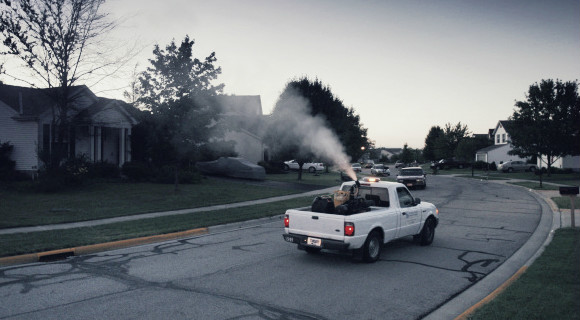
Researchers point to climate change and international travel as likely contributors. The World Health Organization recorded a record 14.6 million dengue cases worldwide last year, and Florida set a state record in 2024 for travel-related dengue infections.
Ryan’s climate projections indicate Brevard currently has roughly six months of temperatures favorable to Aedes aegypti breeding — a window that could expand to nearly eight months by 2030 under current trends.
“We know climate change is shifting mosquito seasons and increasing the risk of disease,” she said. “This could be a one-time spike — or part of a new pattern.”
Brevard County Mosquito Control urges residents to reduce breeding sites by emptying buckets and planters, clearing clogged gutters, storing tires indoors or under cover, and tipping out small containers such as bottle caps and pet bowls.
The county is also applying larval treatments to water features that can’t be drained.
“It’s impossible to reach every nook and cranny in the county,” Faella said. “We rely on residents to help reduce mosquito breeding sites.”
As authorities continue monitoring the situation, health experts say Brevard’s experience highlights how shifting weather patterns could expand the areas and seasons where mosquito-borne diseases become a public-health concern.
 Related Story:
HOT OFF THE PRESS! September 29, 2025 Space Coast Daily News – Brevard County’s Best Newspaper